Septic tank or treatment-plant alarm: what should you do?
Source reviewed with 2 external references. How we review guides
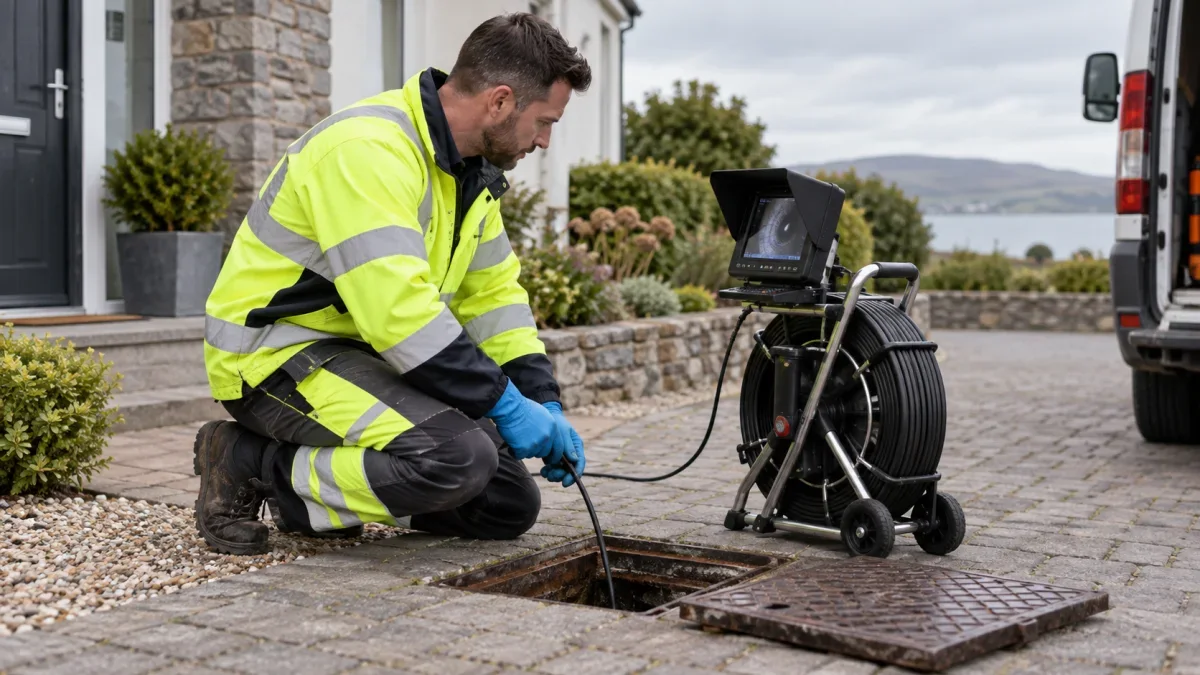
An alarm beside a rural home's wastewater system is a request to investigate, not a diagnosis by itself. What people call a septic-tank alarm may belong to a packaged treatment plant, pump chamber or another part of the installation. Different systems need different responses.
Start with the label and the warning shown on the accessible controller. Keep away from open chambers and sewage, and contact a suitable wastewater service business. This guide helps you describe the problem without attempting electrical repairs, opening a tank or assuming that emptying alone will resolve it.
Identify what is actually alarming
From a safe position, photograph the controller, the displayed words or code and any accessible manufacturer label. Check your installation paperwork or service record for the plant model. Tell the service business if you cannot identify it. Do not open a panel, remove a heavy lid or reach into the system to find a serial number.
Report whether the warning is continuous or intermittent and when it began. Mention a known power outage or recent service without declaring it the cause. Ask the manufacturer or service technician what the particular alarm means and whether an urgent attendance or temporary change in household water use is needed.
Treat sewage escape and high-level warnings seriously
Kingspan's out-of-hours guidance treats a high-level warning, escaping sewage and slow or absent toilet discharge as reasons to arrange emergency tankering support. That is manufacturer guidance for the described circumstances, not evidence that every light or audible alarm means the tank is full. Explain the actual symptoms when calling.[1]
Keep children and pets away from affected ground and prevent contact with wastewater. Do not enter a tank, lean into an opening or attempt a rescue inside it. Do not repeatedly flush toilets or run taps to demonstrate a backup. If sewage is escaping, contact a suitable emergency wastewater contractor rather than waiting for routine online quotations.
Ask the attending business how the immediate overflow risk and the underlying fault will each be handled. Emergency removal of wastewater may be one part of the response; establish who will diagnose the system afterwards and what operating instructions apply in the meantime.
Separate emptying, servicing and repair
A request for routine desludging is not the same as a request to diagnose a controller warning. Ask whether the business services your type of treatment plant and whether electrical or pump work requires another specialist. Give the name of the existing maintenance company if one is responsible for the system.
The EPA's inspection guidance checks maintenance, appropriate desludging, leaks, surface ponding and unwanted rainwater entering domestic wastewater systems. These are different issues. A useful repair discussion should therefore cover the observed fault rather than assuming that every recurring problem is solved by the same emptying visit.[2]
Do not add chemicals, bypass the alarm, redirect discharge or reconnect equipment yourself. Request written advice for your model. If a system was recently installed or repaired, contact the original contractor and check the service agreement before commissioning changes that could complicate responsibility.
Prepare the information a rural call-out needs
- County and general area, with the exact address shared privately when arranging attendance.
- Plant make, model and the precise warning visible at the controller.
- Whether toilets are backing up or wastewater is visible outside.
- Last service and desludging dates, if documented.
- Vehicle access restrictions, gates and the approximate location of the system.
- Any existing maintenance agreement or recent installation work.
Ask what access the contractor needs before moving vehicles or garden equipment. Do not remove covers in advance. For a rented property, notify the person responsible for repairs promptly and agree who can authorise attendance. A clear contact arrangement prevents a service vehicle arriving without permission to proceed.
Compare the complete scope and follow-up
Request the call-out charge, the diagnostic work included and how tankering, parts or additional labour will be authorised. Ask for the complete payable total, including VAT where applicable. A cheap emptying quote is not directly comparable with a service visit that also investigates a pump or control fault.
After attendance, keep the service report, waste-removal documentation where relevant and the explanation of any remaining work. Ask what normal operation should look like and whom to contact if the warning recurs. Do not accept 'alarm silenced' as a complete description of the repair: request the finding and the action taken.
Post the warning, not a guessed solution
Illustrative brief: 'Domestic wastewater treatment plant in rural Wexford showing an alarm since this morning. Controller photo and service record available. Please confirm experience with this model, whether urgent attendance is required and the diagnosis charge. Tank access must be handled by the contractor. Any emptying or parts to be agreed separately.'
Find drainage and septic service businesses
For non-emergency enquiries, Post a treatment-plant repair request
Frequently asked questions
Does a septic alarm always mean the tank needs emptying?+
No. Identify the equipment and specific warning. A high-level alarm needs a different response from an unidentified controller fault; ask the manufacturer or service technician what your system requires.
Should I open the tank before the contractor arrives?+
No. Leave covers and chambers to the attending professional. Keep people away from sewage and openings, and never enter the tank.
Can I wait for normal opening hours?+
Do not wait for routine quotations if sewage is escaping or toilets are backing up. Describe the symptoms to an emergency wastewater service and follow model-specific advice.[1]
Sources and editorial notes
Numbered references link claims in this guide to the sources below. Sources were accessed during the article's research or latest material review.
- [1] Kingspan: out-of-hours treatment plant and pump station support
- [2] EPA Ireland: domestic wastewater inspections and repair
Official guidance and further reading
These links are further reading and do not substantiate every estimate above.