Waterlogged garden in Ireland: what to check before paying for drainage
Source reviewed with 2 external references. How we review guides
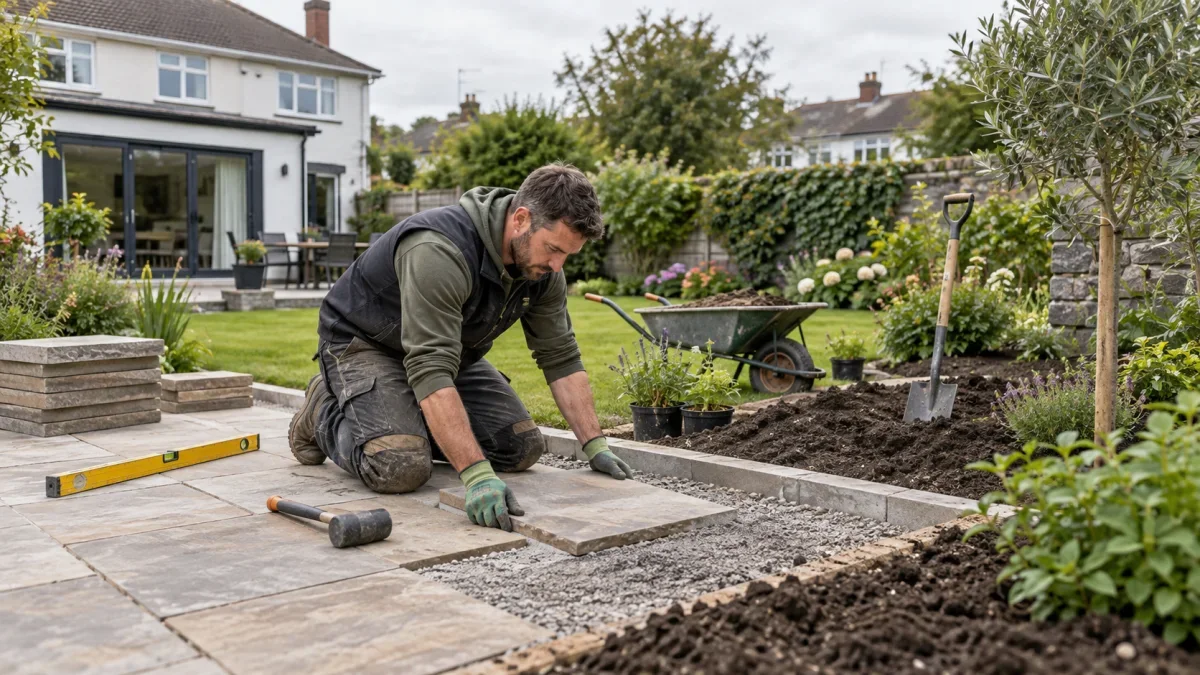
A garden that stays muddy after rain can leave an Irish homeowner unable to use the lawn, reach the shed or let children play outside. The temptation is to order a drain immediately. A better first step is to describe where the water collects, how long it remains and what changed before the problem began.
The RHS identifies heavy soil, compaction and poor preparation as possible causes of lawn waterlogging. Those are possibilities, not a diagnosis of your garden. This guide helps you prepare a useful request for a landscaper or drainage specialist, compare proposed work and avoid paying for an installation whose destination for the water has not been established.[1]
Record the pattern before choosing the repair
Take photographs from the same safe position during or soon after rain and again when conditions improve. Include the whole garden, the affected patch and nearby paths or buildings. Record dates and approximate drainage time rather than describing every wet spell as permanent flooding. Do not enter deep or potentially contaminated water to take photographs.
- Is the water in one hollow, beside paving or spread across the lawn?
- Does it appear during rain, after using an appliance or even in dry weather?
- Have building work, machinery, a new patio or a raised bed changed the garden recently?
- Are there visible overflowing gutters, downpipes or surface gullies nearby?
- Is the problem approaching a door, air vent, retaining wall or shared boundary?
These observations help a contractor decide what to inspect; they do not prove responsibility or the route of an underground pipe. If you have a garden plan, drainage drawing or photographs from before recent building work, offer them alongside your request. Say explicitly when the information is only approximate.
Know when the problem is not simply lawn care
A landscaper is a sensible starting point for recurring wet ground and lawn reinstatement. Explain if there is also an overflowing drain, sewage smell or water entering the building, because that may need a drainage contractor, plumber or another specialist first. An online form is not an emergency response service: use appropriate urgent help if people or property are at immediate risk.
Avoid treating new turf, a layer of gravel or additional paving as a diagnosis. Ask what evidence supports the proposed cause and whether a separate investigation is needed. For example, ask a contractor proposing excavation to distinguish investigation, installation and making good in the quotation rather than selling one unexplained garden package.
Aeration and drainage are different scopes
For compacted lawns, the RHS describes aeration as one possible measure and advises waiting until standing water has drained before doing it. It also cautions against walking on waterlogged ground. Ask a lawn-care professional whether surface treatment is appropriate for the observed conditions; do not assume it will resolve every recurring wet patch.[1]
If a drainage system is proposed, ask for a simple plan showing the collection area, route and intended destination. A description such as 'install a French drain' is incomplete without explaining where the collected water goes. Ask who will check levels, ground conditions, existing services and any permissions or third-party agreement needed before work starts.
Do not authorise a connection to a public system, a neighbouring plot or an unidentified pipe simply because it is nearby. Have the contractor establish what is appropriate for the site and who needs to approve it. Keep that decision in the written scope rather than relying on a conversation beside an open trench.
What should a garden drainage quote include?
There is no useful fixed national price for a wet garden without knowing the area, access, diagnosis and proposed work. Request a site-specific total. A small lawn treatment and a drainage installation involving excavation, spoil removal and paving reinstatement are not comparable purchases, even when both are described as improving drainage.
- Survey or investigation included, and any separately charged follow-up tests.
- Marked work area, installation route and agreed destination for collected water.
- Specified materials and the assumptions behind the chosen design.
- Machine access, protection of existing paths and handling of excavated material.
- Reinstatement of turf, planting, edging and any paving disturbed.
- VAT where applicable, exclusions, weather delays and the process for approving extras.
Ask how the contractor will explain the completed work and what maintenance information you receive. If a guarantee is offered, request its wording, exclusions and provider. Avoid translating a verbal promise into a guarantee that the whole garden can never hold water again.
Plan access and the finished garden
Measure the narrowest route from the road to the work area and describe steps, locked gates and shared entrances. Say whether machinery could reach the garden without passing through the house. Include pets, play equipment and planting you want retained. Access can change the method and cost even when two gardens have similar dimensions.
Agree what 'finished' means: roughly level ground, replacement topsoil, seed, turf or restored paving. Ask when the area can be used again and how weather could affect that advice. Request a photograph or sketch of concealed work before it is covered, so future gardening does not depend on remembering where a drain was installed.
Example request for a waterlogged garden
Illustrative brief: 'Back lawn in a three-bedroom home in Meath holds water along the patio edge after rain. Photographs show the area just after rain and the next afternoon. Patio was extended last year; no sewage smell noticed. Side-gate access is approximately 900 mm. Please inspect the cause, explain suitable options and quote separately for any investigation, drainage and lawn reinstatement.'
The CCPC recommends researching contractors, getting written quotations and recording the agreed work before paying or starting. Use the same observations and photographs for each enquiry so different contractors are answering the same question.[2]
Find garden and landscaping professionals in Ireland
Describe your garden problem: post a landscaping job
Frequently asked questions
Does a waterlogged lawn always need a French drain?+
No. Ask for an assessment of the cause and available options. A drainage proposal also needs a suitable destination for the collected water, not just a trench location.
Should I aerate a lawn while water is standing on it?+
The RHS advises waiting until standing water has drained before aerating. Avoid unnecessary walking on waterlogged ground and ask whether aeration suits your lawn's condition.[1]
Can I get a garden drainage price from photographs alone?+
Photographs help with an initial discussion, but an installation quote may need a site visit to assess levels, access, ground conditions and an appropriate outlet. Ask what is provisional.
Sources and editorial notes
Numbered references link claims in this guide to the sources below. Sources were accessed during the article's research or latest material review.