Bathroom extractor fan running but not clearing steam?
Source reviewed with 3 external references. How we review guides
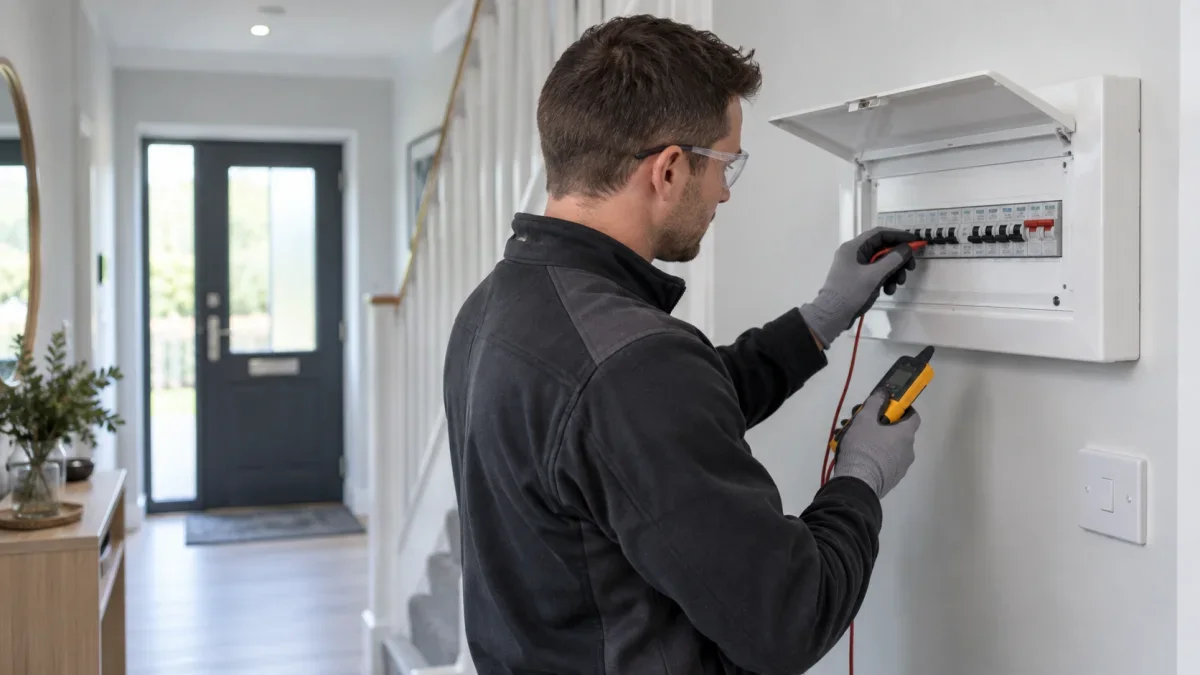
The fan makes noise, but the mirror stays fogged and water remains on the bathroom surfaces. Before ordering a more powerful replacement, ask whether the existing installation is actually extracting air where it needs to go. The motor is only one part of the system.
This guide helps Irish homeowners prepare an extractor assessment, not alter bathroom wiring or specify a ventilation design. You can describe ordinary operation and photograph accessible surfaces. Leave electrical connections, concealed ducts and work in roof spaces to a suitable professional.
Describe what the fan does during normal use
Record how the fan starts: a light switch, separate switch, timer or automatic control. Note whether it continues after the light goes off, runs continuously or never appears to start. If you have instructions, identify the model without removing a cover. Do not change hidden settings to see what happens.
Say whether the issue is new or has existed since installation. Include the approximate room size, whether it has a window and any recent shower or insulation work. A useful description is 'surfaces remain wet after normal use'; a guessed statement that the fan is the wrong size is less helpful.
Noise alone does not establish how well the installed system performs. Ask for assessment rather than relying on a tissue test or a product's free-air rating. If the unit is dripping, smells burnt, trips a circuit or behaves unusually, stop using it and seek professional advice instead of gathering more examples.
Ask about the route to outside and replacement air
SEAI describes wet-room extract ventilation as removing water vapour and pollutants directly outside, with background ventilation contributing to the overall system. Ask the installer to consider where air leaves the home and how replacement air reaches the bathroom. A fan should not be assessed as an isolated decorative fitting.[1]
Tell the business whether the fan is on an external wall, the ceiling or part of a whole-home ventilation system. If the outlet is not identifiable from a safe ground-level position, say it is unknown. Do not climb outside or enter the attic to complete a quotation checklist.
Request confirmation of the actual discharge route and any restrictions found. Where the home has a central ventilation unit, explain that before booking a standalone fan swap. Ask whether the installer services that system and whether the proposed change is compatible with it.
A replacement fan may not resolve a duct problem
Vent-Axia's design guidance highlights ducting, insulation in cold roof spaces and the need for adequate air replacement. Those general technical principles are useful inspection questions, not a substitute for Irish requirements or a specification for your home. Ask the installer which parts of the existing route have actually been checked.[2]
A quotation should say whether it covers a straightforward fan replacement, changes to the duct or outlet, or a wider ventilation assessment. If access is concealed, agree any opening-up first. Do not assume a larger advertised airflow will overcome every limitation of the installed route.
Likewise, do not block background vents to make the room feel warmer while asking the fan to deal with the consequences. Discuss comfort and ventilation together. Report condensation elsewhere in the home so that the professional knows whether the bathroom symptom is part of a wider issue.
Check maintenance instructions before cleaning
Use the exact manufacturer's instructions for any owner maintenance. Do not remove electrical parts, spray liquid into the unit or reach into a moving fan. If the cover is high, difficult to access or unfamiliar, include cleaning in the professional visit instead of improvising a ladder setup in the bathroom.
Tell the technician when the fan was last maintained, if known, and whether a filter or central unit is involved. A visibly clean cover is not proof that concealed sections are clear. Ask for a simple written maintenance routine for the installation actually left in place, including what the homeowner may safely do.
Compare installation and handover, not just hardware
For electrical work in the Republic of Ireland, check that the contractor is registered with Safe Electric as a Registered Electrical Contractor. The CRU explains the registration schemes and directs customers to the official register. A general ventilation or directory listing is not a substitute for checking the electrical contractor.[3]
Ask for the model, controls, duct work, electrical work, access and making good to be itemised. Confirm the full charge including VAT where applicable, and ask what testing or commissioning will be recorded. A fan supplied in a box is not comparable with an assessed and completed installation.
At handover, have the controls demonstrated and ask what ordinary operation should look like. Keep the instructions and any applicable electrical documentation. If the room still performs poorly, you should know who will review the installation and whether the follow-up is included, rather than buying another fan immediately.
Post an extractor assessment request
Illustrative brief: 'Ceiling extractor in a Dublin bathroom runs with the light, but steam clears poorly after showers. Model photo available; duct route unknown. Please assess the fan, controls, discharge route and replacement-air provision before quoting a replacement. Include any required duct work, testing and making good in the proposal.'
Find electrical professionals for an extractor assessment
Describe the ventilation problem: Post a bathroom extractor job
Frequently asked questions
Will a louder or larger fan clear steam faster?+
Not necessarily. Ask for the installed route and air supply to be assessed, rather than choosing only by motor noise or an advertised product rating.
Should every fan stop with the light?+
No. Controls vary. Identify your model and system, explain what it currently does and ask the installer to demonstrate the intended operation. Do not change concealed settings yourself.
Should I book cleaning or replacement?+
Describe the symptom and maintenance history first. Ask whether the initial visit includes assessment and safe cleaning, and require approval before a replacement or extra duct work.
Sources and editorial notes
Numbered references link claims in this guide to the sources below. Sources were accessed during the article's research or latest material review.
- [1] SEAI: home ventilation systems
- [2] Vent-Axia: ventilation design guidelines
- [3] CRU: RGI and Safe Electric registration schemes
Official guidance and further reading
- CCPC: Home improvement and building work disputes
- Safe Electric: Find a Registered Electrical Contractor
These links are further reading and do not substantiate every estimate above.