Boiler keeps losing pressure? A homeowner's guide in Ireland
Source reviewed with 2 external references. How we review guides
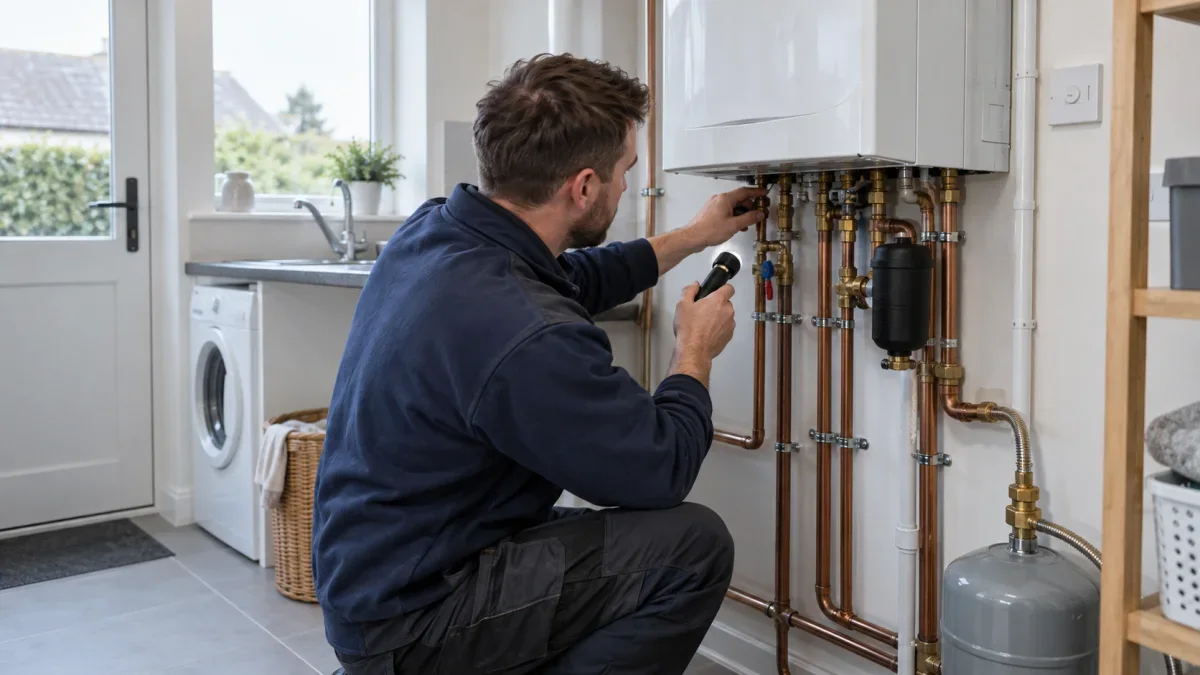
A boiler that needs topping up again soon after the last visit is frustrating, especially when the heating fails before work or school. The useful question is not simply how to restore the gauge reading. It is why the system is losing pressure and who should investigate it.
This guide concerns sealed heating systems with a pressure indicator. It is not a filling-loop tutorial or a diagnosis for every oil, gas or heat-pump installation. Use the exact appliance manual, and describe the symptom to a heating professional rather than assuming the boiler itself needs replacement.
Read the display before trying another reset
Photograph the accessible display, error code and pressure reading. Note whether the system was cold or had recently heated the house. A reading taken during heating is not directly comparable with one taken after the system cools. Write down when you last topped up or had a radiator bled, if known.
Vaillant identifies radiator bleeding, system leaks and faults within the appliance as possible reasons for pressure loss. Its guidance also warns homeowners not to remove the boiler casing. These are possible investigation routes, not proof that any particular component has failed in your home.[1]
Avoid borrowing a target pressure or fault-code explanation from a different model online. If the manual is missing, give the installer the make and model. Do not keep resetting a lockout simply to obtain more observations, and do not run equipment you believe is unsafe.
Record a pattern without opening the system
If safe, look at exposed radiator connections and the surrounding floor for visible drips or staining. A photograph of an existing mark is useful; dismantling a joint to see whether it leaks is not. Do not pull up floors, reach into hot pipework or crawl into an unsafe space to complete a job request.
- How quickly the reading falls: hours, days or longer.
- Whether heating, hot water or both stop working.
- Any visible water, ceiling staining or recent plumbing work.
- The last service date and any previous pressure-loss repair.
- Whether a previous engineer advised a specific follow-up test.
Label uncertainty honestly. 'No leak visible in the rooms I checked' is more useful than 'there is definitely no leak'. Hidden sections remain unexamined. Share the same short timeline with each business so that quotations are based on the same information.
Know the limit of topping up
Restoring the reading does not explain a recurring fault. Ask the installer whether any homeowner action described in your model's manual is appropriate while waiting. If you are unsure which control is the filling arrangement, do not experiment with nearby valves. Never obstruct a discharge pipe or defeat a safety device.
For work on a natural-gas appliance or gas pipework in the Republic of Ireland, use a Registered Gas Installer. Gas Networks Ireland specifically directs customers to an RGI for installation, servicing, repair or removal. A general plumbing listing alone does not establish gas registration; check the person attending.[2]
This article is not emergency gas advice. If you suspect a gas leak or another immediate danger, leave the affected area and contact the appropriate emergency service from a safe location. Do not wait for replies to an online job post.
Request diagnosis before agreeing to replacement
Ask what the first appointment includes: checking the appliance, inspecting the accessible heating circuit and explaining any further investigation. A boiler service, a leak investigation and a fixed-price component replacement are different scopes. Confirm the attendance charge, time allowance and whether a repair needs separate approval.
If replacement is suggested, request the finding behind that recommendation and a written comparison with the repair option where one exists. Include the appliance age, warranty position and previous repair history in the discussion. Do not order an expansion vessel, valve or sensor because a similar symptom appeared in a forum.
Agree how success will be checked
Before the visit ends, ask what was found, what was changed and what follow-up observation is needed. Keep the invoice and any applicable certificate. Record the readings as instructed by the installer rather than repeatedly changing settings yourself. Establish who to contact if the original symptom returns.
If the investigation moves beyond the boiler into concealed pipework, ask for a separate plan covering access, testing and making good. A useful report distinguishes a confirmed leak from an area that still needs checking. Permission to investigate should not be treated as unlimited authority to lift finished floors.
Write a heating repair request that gets useful replies
Illustrative brief: 'Sealed gas heating system in a Meath house losing pressure over several days. Boiler make, model, display photos and service history available. No casing removed. Please quote an initial diagnosis, explain the attendance charge and confirm RGI registration for any gas-appliance work. Further repairs to be agreed after the findings.'
Compare plumbing and heating professionals
Describe the recurring fault: Post a boiler pressure-loss job
Frequently asked questions
Does falling pressure always mean a visible leak?+
No. Visible pipework is only part of the installation, and appliance faults can also require investigation. Record what you can see without removing covers; ask the engineer to establish the cause.[1]
Can I book a standard service instead?+
Tell the business about the pressure loss before booking. Ask whether fault diagnosis is included or needs a different appointment; do not assume a routine service price covers tracing a concealed leak.
Should I replace the boiler immediately?+
Not on the symptom alone. Request a diagnosis, repair options and the basis for any replacement recommendation. The appropriate decision depends on the actual fault and the condition of the installation.
Sources and editorial notes
Numbered references link claims in this guide to the sources below. Sources were accessed during the article's research or latest material review.
Official guidance and further reading
These links are further reading and do not substantiate every estimate above.